RFQ
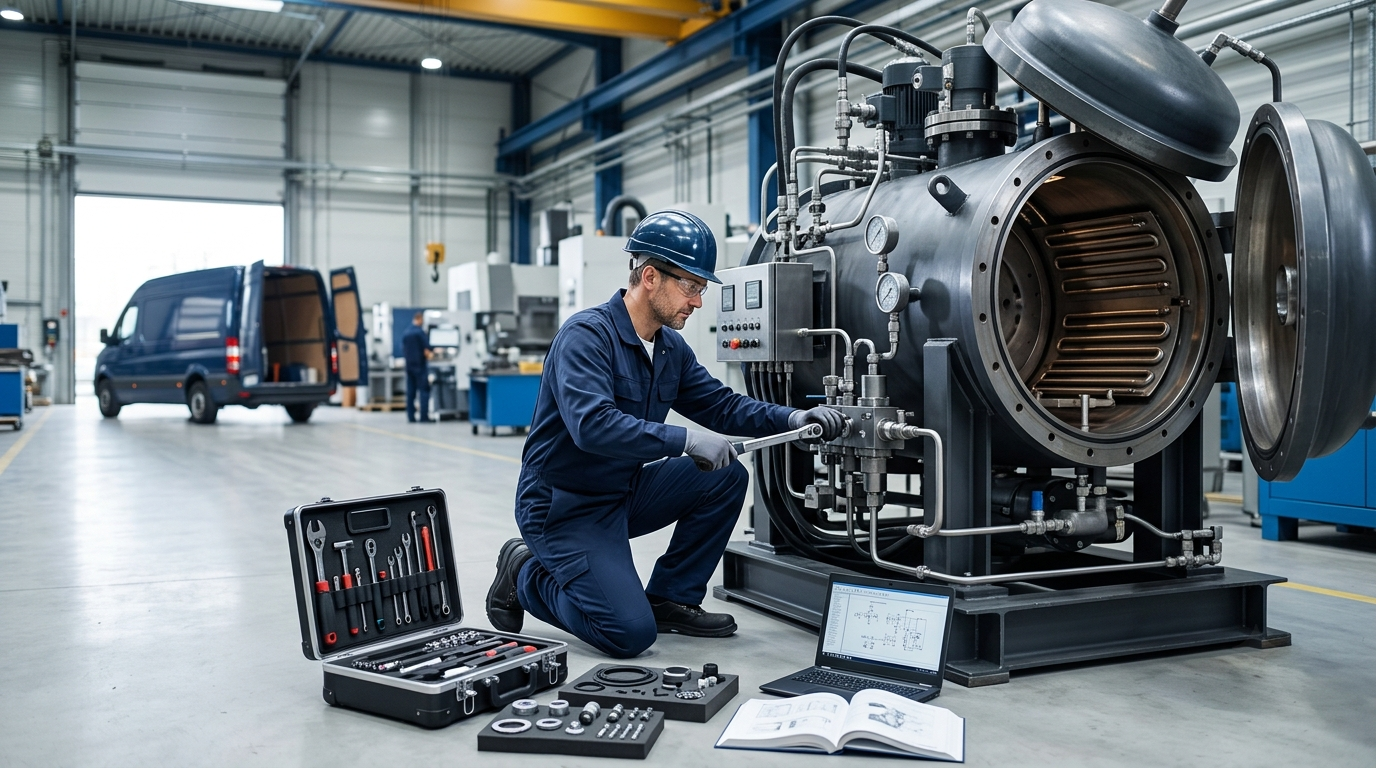
Maintenance service scene for pressure processing equipment
Go back to home

Service Lifecycle

Sustain stable production capability from selection through maintenance

High-value industrial equipment decisions extend well beyond the product page. Our lifecycle service covers selection, facility planning, installation, training, spare parts, remote diagnostics, and preventive maintenance.

Remote diagnostics digital service visualOperator training scene for HIP equipmentGlobal service network map background

Service Portfolio

Define after-sales support as a service scope your team can specify, accept, and repeat

Define the remote diagnostics, spare parts, training, maintenance, and audit support required for dependable long-term operation.

Remote Diagnostics & Equipment Health

Use alarms, pressure-temperature curves, cooling-water data, gas-system status, and cycle history to accelerate troubleshooting and reduce unplanned downtime.

  • Secure remote troubleshooting
  • Operating-data review
  • Abnormal-trend recommendations

Spare Parts & Consumables Strategy

A tiered strategy for seals, hot-zone components, sensors, valve assemblies, and critical electrical parts helps maintain an appropriate on-site inventory.

  • Critical-spares package
  • Annual consumables plan
  • Planned-downtime scheduling

Preventive Maintenance

Set inspection intervals by operating hours, cycle count, and component condition to prevent avoidable failures and emergency repairs.

  • Annual maintenance plan
  • Safety-interlock review
  • Pressure-system inspection

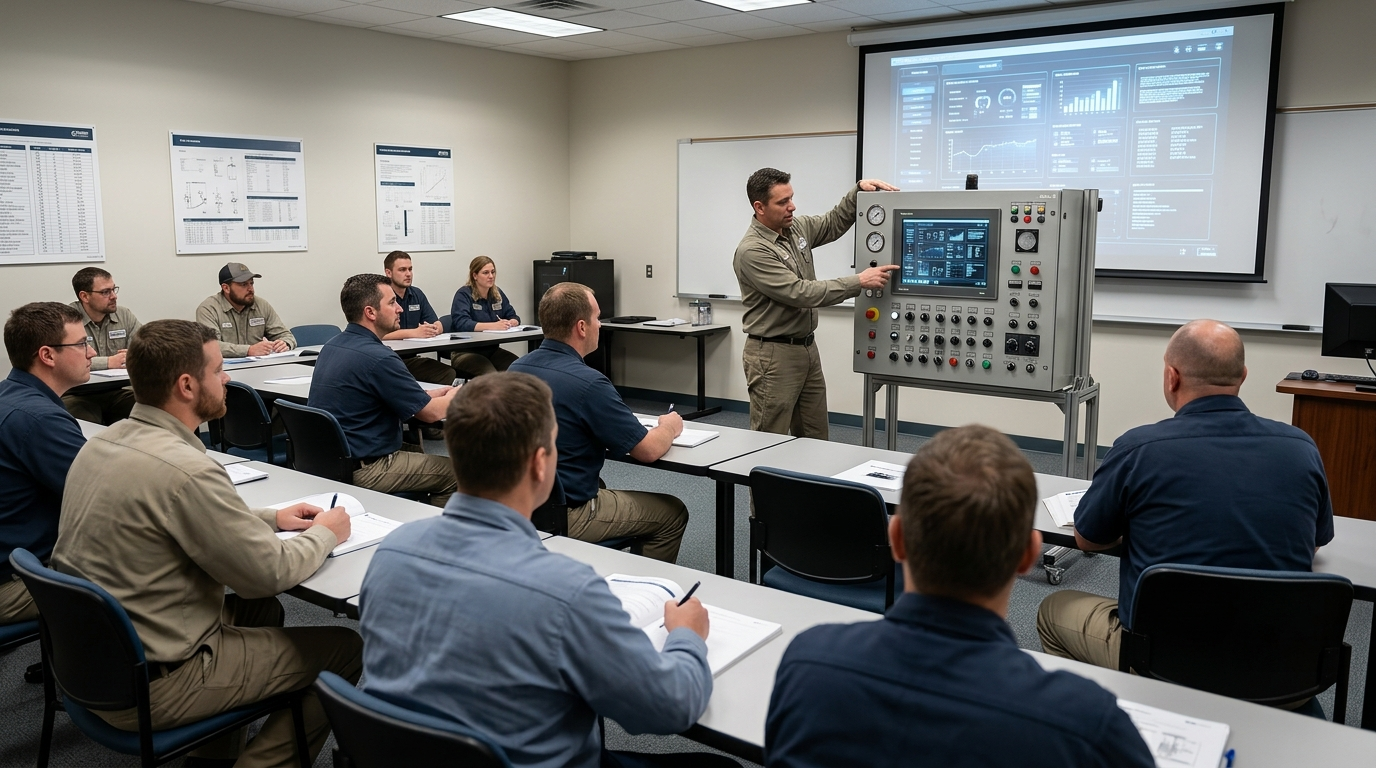
Operations & Process Training

Provide role-based training for operators, process engineers, quality personnel, and EHS teams to support safe startup and repeatable production.

  • Loading and unloading
  • Recipe permissions
  • Alarm response
  • Quality records

Upgrades & Retrofits

Modernize controls, HMI, data logging, rapid cooling, and safety systems in phases to extend equipment service life.

  • Control-system modernization
  • Historian and reporting upgrades
  • Cooling-capacity upgrade

Acceptance and Audit Support

Prepare traceable FAT/SAT records, customer-audit evidence, and periodic requalification documentation for procurement and quality review.

  • FAT/SAT templates
  • Validation package
  • Sample batch report

Delivery Path

Six-Step Delivery Path from Process Goal to Stable Operation

Each step has a clear technical input, acceptance output, and responsibility boundary, reducing uncertainty when introducing a HIP system.

01

Define Process Objectives

Define the technical inputs, facility interfaces, acceptance records, responsibilities, and training deliverables required at this stage.

02

Select Equipment and Validate Throughput

Define the technical inputs, facility interfaces, acceptance records, responsibilities, and training deliverables required at this stage.

03

Plan Facility and Utility Interfaces

Define the technical inputs, facility interfaces, acceptance records, responsibilities, and training deliverables required at this stage.
04

Manufacturing, FAT & Transportation

Define the technical inputs, facility interfaces, acceptance records, responsibilities, and training deliverables required at this stage.

05

Installation, Commissioning & SAT

Define the technical inputs, facility interfaces, acceptance records, responsibilities, and training deliverables required at this stage.

06

Training, Spares & Preventive Maintenance

Define the technical inputs, facility interfaces, acceptance records, responsibilities, and training deliverables required at this stage.

Home